PEEK材料的機器人傳感器介紹
PEEK(聚醚醚酮)是一種高性能特種工程塑料,具備耐高溫(長期使用溫度約 240℃)、耐化學腐蝕、高強度、輕量化、低摩擦系數及優異的電氣絕緣性等特性,這些優勢使其成為機器人傳感器關鍵部件的理想材料,能解決傳統金屬或普通塑料傳感器在精度、穩定性、環境適應性上的短板。
一、
核心應用類型及特點
PEEK 材料主要通過制造傳感器的
核心結構件或
功能基底發揮作用,常見應用類型如下:
1.六維力 / 力矩傳感器
應用部位:傳感器的 "彈性體"(力信號感知核心部件)。
核心價值:傳統彈性體多采用鋁合金,而 PEEK 的彈性模量與密度比更優 —— 在保證結構強度的同時,大幅降低彈性體質量,減少機器人運動時的慣性干擾,提升力值測量精度(可達 ±0.1% FS)和動態響應速度(響應時間<1ms)。
典型場景:工業機器人裝配(如精密螺絲鎖付力控制)、協作機器人人機交互(如碰撞力感知)、醫療機器人手術力反饋(如骨科機器人骨面打磨力監測)。
2.觸覺 / 應變傳感器
應用部位:傳感器的柔性基底或電極載體。
核心價值:PEEK 具備一定柔性與耐疲勞性,可加工成薄型或異形結構,適配機器人手指、抓手等曲面 / 柔性接觸場景;同時其電氣絕緣性可避免信號干擾,保障觸覺(如壓力、紋理識別)或應變(如關節形變)數據的穩定性。
典型場景:服務機器人抓取易碎品(如玻璃、水果)的壓力感知、工業機器人柔性裝配的貼合度應變監測。
3.耐腐蝕環境專用傳感器
應用部位:傳感器的外殼、探頭保護套或接觸部件。
核心價值:PEEK 對酸堿溶液、有機溶劑及高溫蒸汽(如食品行業的 CIP 清洗)耐受性極強,遠優于不銹鋼或普通塑料,可保護傳感器內部元件不受腐蝕,延長使用壽命。
典型場景:食品 / 醫藥機器人的液位 / 濃度傳感器(如醬料罐液位監測)、化工機器人的環境參數傳感器(如腐蝕性氣體檢測探頭保護)。
二、相比傳統材料的核心優勢
|
對比維度 |
PEEK 材料 |
傳統材料(鋁合金 / 普通塑料) |
|
測量精度 |
低慣性,提升動態精度 |
慣性大,動態響應滯后 |
|
環境適應性 |
耐高溫、耐腐蝕 |
高溫易變形,腐蝕環境易損壞 |
|
輕量化 |
密度僅 1.32g/cm³(約為鋁的 1/2) |
鋁合金密度 2.7g/cm³,重量大 |
|
使用壽命 |
耐疲勞、抗老化 |
金屬易銹蝕,普通塑料易老化脆 |
三、典型應用領域
工業機器人:裝配力控制、打磨力反饋、抓取壓力監測;
醫療機器人:手術器械力感知(如腹腔鏡操作力反饋)、康復機器人的關節應變監測;
特種機器人:食品 / 化工領域的耐腐蝕環境傳感器、高溫工況(如汽車焊接)的溫度 / 力傳感器。
Introduction to PEEK Material Robot Sensors
PEEK (Polyether Ether Ketone) is a high-performance specialty engineering plastic with properties such as high temperature resistance (long-term service temperature around 240°C), chemical corrosion resistance, high strength, lightweight, low friction coefficient, and excellent electrical insulation. These advantages make it an ideal material for key components of robot sensors, addressing the shortcomings of traditional metal or ordinary plastic sensors in terms of precision, stability, and environmental adaptability.
I. Core Application Types and Characteristics
PEEK material mainly functions by manufacturing the core structural components or functional substrates of sensors. Common application types are as follows:
1. Six-Dimensional Force/Torque Sensors
Application Part: The "elastic body" (the core component for force signal perception) of the sensor.
Core Value: Traditional elastic bodies are mostly made of aluminum alloy, while PEEK has a better ratio of elastic modulus to density - ensuring structural strength while significantly reducing the mass of the elastic body, minimizing inertial interference during robot movement, and improving force measurement accuracy (up to ±0.1% FS) and dynamic response speed (response time < 1ms).
Typical Scenarios: Industrial robot assembly (such as precise screw tightening force control), collaborative robot human-machine interaction (such as collision force perception), medical robot surgical force feedback (such as bone surface grinding force monitoring in orthopedic robots).
2. Tactile/Strain Sensors
Application Part: The flexible substrate or electrode carrier of the sensor.
Core Value: PEEK has certain flexibility and fatigue resistance, allowing it to be processed into thin or irregular shapes, suitable for curved or flexible contact scenarios such as robot fingers and grippers; at the same time, its electrical insulation can prevent signal interference, ensuring the stability of tactile (such as pressure, texture recognition) or strain (such as joint deformation) data.
Typical Scenarios: Pressure perception in service robots when grasping fragile items (such as glass, fruits), strain monitoring for the fit in industrial robot flexible assembly.
3. Specialized Sensors for Corrosive Environments
Application Part: The housing, probe protection sleeve, or contact components of the sensor.
Core Value: PEEK has extremely strong resistance to acids, alkalis, organic solvents, and high-temperature steam (such as CIP cleaning in the food industry), far superior to stainless steel or ordinary plastics, protecting the internal components of the sensor from corrosion and extending its service life.
Typical Scenarios: Liquid level/concentration sensors in food/medical robots (such as monitoring the liquid level in sauce tanks), environmental parameter sensors in chemical robots (such as protecting corrosive gas detection probes).
II. Core Advantages over Traditional Materials
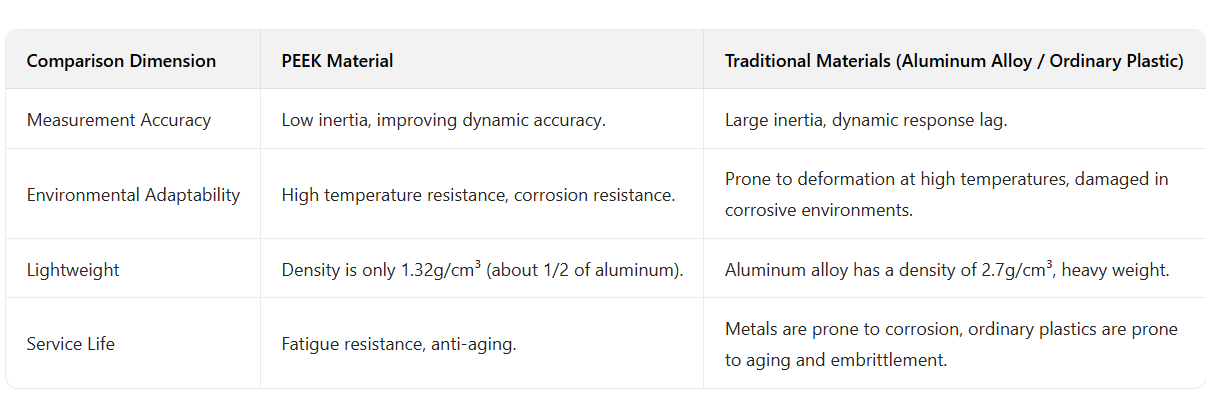
III. Typical Application Fields
Industrial robots: Assembly force control, grinding force feedback, grasping pressure monitoring;
Medical robots: Force perception of surgical instruments (such as force feedback in laparoscopic operations), joint strain monitoring of rehabilitation robots;
Special robots: Corrosion-resistant environment sensors in food/chemical fields, temperature/force sensors in high-temperature conditions (such as automotive welding).
- 大連路陽科技開發有限公司
- 全國熱線:0411-87641009
- 電子郵箱:
- 地址:遼寧省大連市經濟技術開發區保靈街1-3號



 全國服務熱線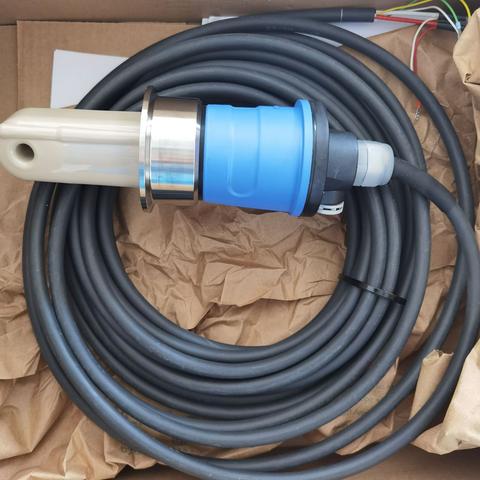
 聯系我們
聯系我們
 聯系我們
聯系我們